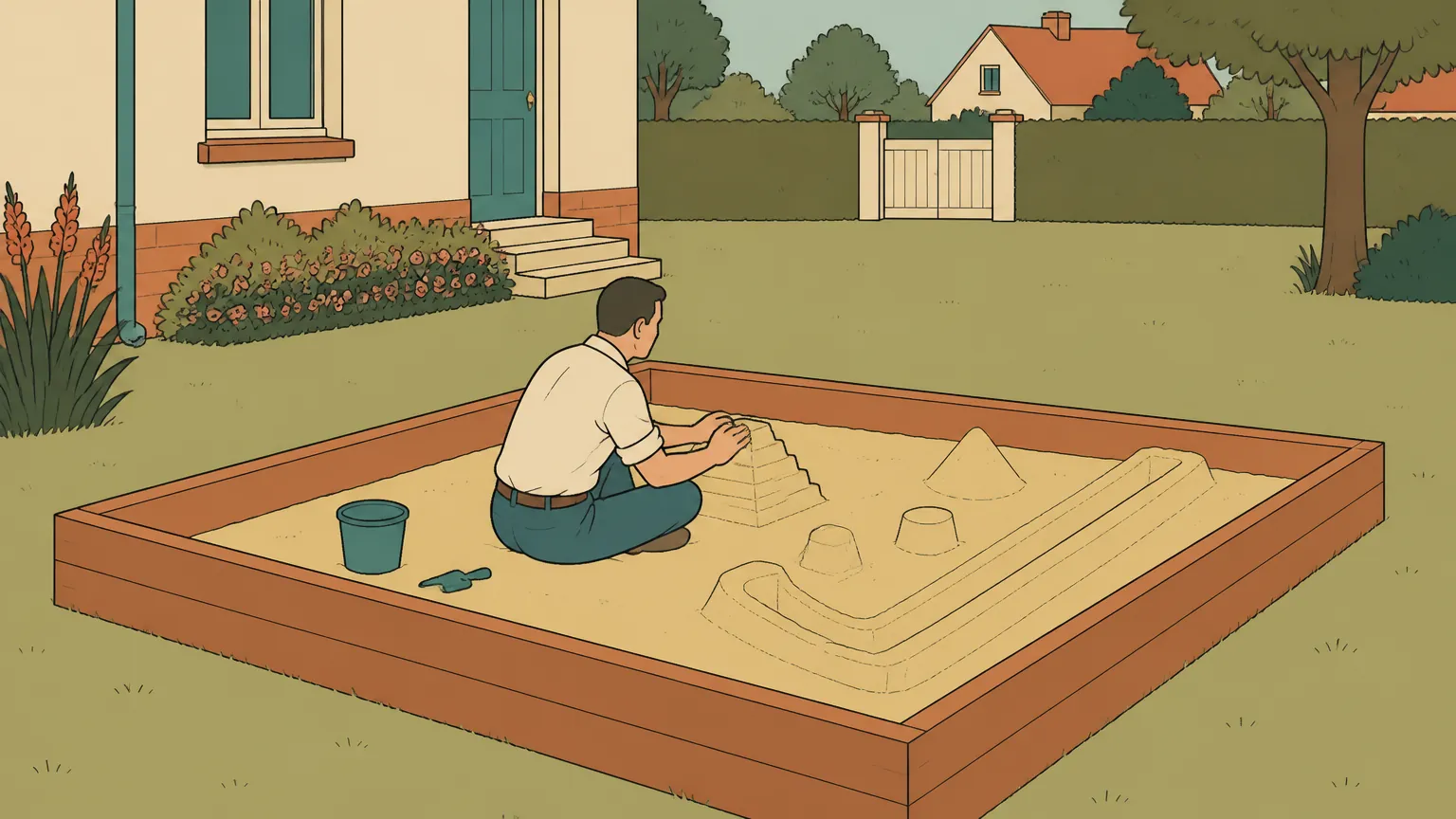
Is his personal change only superficial? The sandbox of the mind's reality
Frederic reviews the changes he has made over recent years and says they feel interesting but still superficial, and asks whether that perception is correct.
The Wonders confirm he has altered belief structures and psychologies and opened himself to new ideas, but is still stuck in his mind playing with them: as he opens, another part of him closes down and becomes more stubborn, leaving him oscillating.
There is a willingness to open and to see himself differently, but also fear of doing so because he does not know what it would mean.
Since he began speaking with them his life has changed substantially - he is now married with a child - and he fears that further change would make all of that leave, believing he must stay grounded in reality to enjoy the benefits of the choices he has made.
They tell him that groundedness in reality is only groundedness in the reality of his mind's illusions: the mind treats work, marriage, children, sickness and death as inevitabilities.
He plays with constructs - he can be wealthy rather than poor, he need not work hard, he can have children without making them - but he is still playing inside the same sandbox, afraid that outside it he would not know what to do and could never get back in.
They say that if he explored that fear he might choose to step outside, and would then discover he could return to the sandbox whenever he chose and could explore ideas not rooted in the sandbox's reality.
Frederic illustrates with money: raising a salary by 10 or 20 percent is easy, but multiplying it by 10 or 100 requires a complete paradigm shift.
The Wonders point out that to multiply it a hundredfold he would have to play by the sandbox's rules, not his own, and that by insisting on his own rules he restricts himself to small increments - though they add there is nothing wrong with small increments.