Session 2 — January 2007
Finite incarnational energy versus limitlessness, and the definition of the mind ▶ Play excerpt07:03

Frederick presents a view held by a woman he has been doing identity work with: that we incarnate with a finite amount of energy, that everything the body must process consumes some of it, and that therefore supplementation and cleanses should be minimal and things done by intention instead.
The Wonders answer with the third defining statement, 'I am limitless, my choices reflect my limitlessness', and say the woman's choices declare her a finite, limited being who must guard her energy out of fear, which stops her from exploring beyond herself.
They explain that on incarnating one is an extension of soul essence; it is the mind created by the ego personality that judges, and that judgment creates the illusion of finiteness, of a fixed quantity of energy, and thus creates aging and death.
Asked to define 'mind', they say it comprises the conscious, unconscious and subconscious: the subconscious is interconnected to all existence and is the doorway to soul essence; the unconscious covers automatic physical and emotional functions such as breathing and heartbeat; the conscious is the thinking portion where nearly everything begins before passing to the other two.
The subconscious does not judge, so it simply accepts what the thinking mind fears.
The mind is the part that controls existence, chooses out of fear and creates illusions, while the self — the 'you that is you', encompassing physical, mental, emotional and spiritual and connected to soul essence — is greater than the mind.
They point out that Frederick's curiosity and yearning to explore came from the self, while the question itself was formulated by the mind and, like most conscious thoughts, is couched in fear.
They mention their completed series on the mind and on aging.
Vitamin C dosage and the fear of high supplementation ▶ Play excerpt05:16

Frederick admits he did not follow the recommended 12,000 mg per day of vitamin C because he feared diarrhea.
The Wonders explain that divided into six doses this does not occur, and that if it does one should start lower (2,000, then 1,500, then 1,000 mg) until there is none.
They describe vitamin C as primarily cleansing — cleansing the body and colon, clearing yeast and bacterial infection, activating cellular energy — so diarrhea at low doses is a sign the body is cleansing; tolerance rises as the body begins to use rather than flush the vitamin, improving cell replication, reducing mutations, lengthening cell life and improving skin and hair.
They state the average human body can accept roughly 18,000 to 22,000 mg per day, and 12,000 was chosen for him because of his diet.
They criticise the pharmaceutical push in Europe to cap vitamin C near 50 mg per day, noting 60 mg merely avoids scurvy rather than nourishing the body, and ask how many of the people warning against high doses are truly healthy.
They recommend he look up Dr. Pauling, who took 15,000-18,000 mg daily, sometimes 25,000, and up to 50,000 when ill, and lived to about 94 — though they add that the real answer is for Frederick to simply choose and explore it himself.
Eye infection: physical treatment and commanding the mind ▶ Play excerpt06:20
Frederick asks about a small infection in his eye and at what level it originates.
The Wonders say it involves the physical, affected by the emotional and specifically by the mental: his mind has been controlling him emotionally because he has been avoiding seeing the broader picture — seeing beyond the limited reality he exists in — while trying to explore beyond it and repeatedly limiting himself.
The emotional body signalled this and the physical body complied.
Physically they recommend colloidal silver, two drops in the eye three times per day, which will clear the infection; but the mind must also be addressed or another symptom will follow.
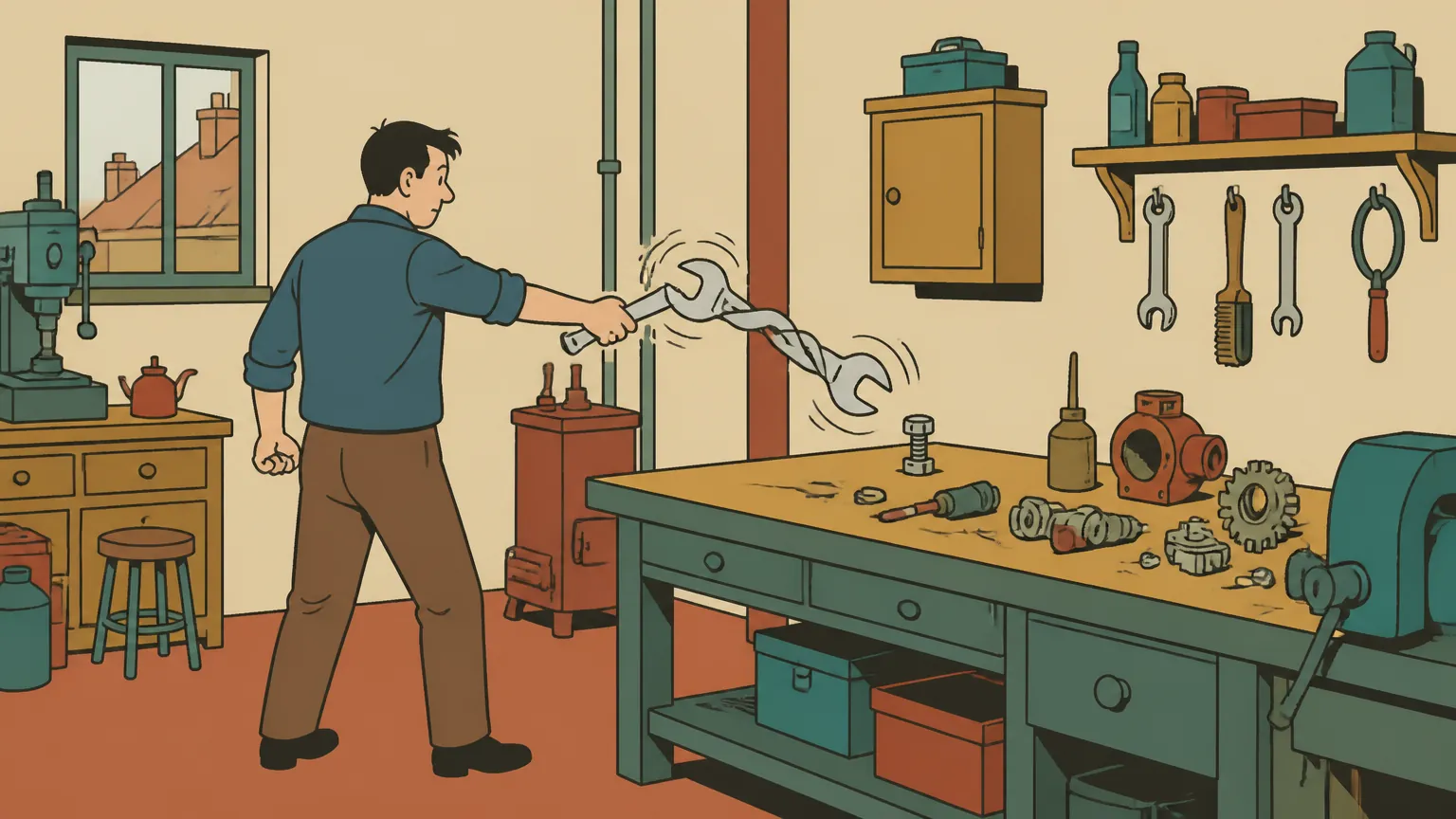
Asked what it means to 'command the mind' when he feels he is the mind, they explain the mind is a tool, like a wrench or screwdriver — a powerful one that can create reality, make one sick or healthy, strong or weak — but a tool that needs direction.
Lacking direction from an unaware newly incarnated being, the mind judges everything, finds itself insufficient, and controls everything to ensure its survival.
Commanding it means the 'you that is you', the I am, telling the mind to stop interfering — and then continuing to observe and to choose, because the mind returns as soon as attention wanders.
Fear-based choices signal the mind is choosing; a choice made from a grounded knowing that it will expand one's existence comes from the self.
They advise not trying to figure things out (that is the mind puzzling), but observing without judgment — one's feelings, thoughts, actions, desires and choices — until the awareness 'I am' arises, and then choosing.
Regrowing teeth and enamel as a question of belief ▶ Play excerpt02:54

Frederick connects the discussion to the previous session's topic of tooth enamel, saying he believes bone can be restored but that enamel, being crystalline, is much harder.
The Wonders reply that this is only a belief, a limitation he is accepting: if the body can repair bone and repair cut skin, the same cells that began skin can begin teeth, and the only obstacle is the mind's judgment — chiefly having been told that after baby teeth one gets a single adult set for life.
They note some individuals lack some of these judgments and simply grow teeth, mentioning Willard Fuller (who they say does this to a degree, still carrying some fear) and certain tribes in central Africa, and observe that science is approaching this through stem cell research.
They tell him his further belief that a tooth cannot regain enamel once damaged is not stupid, merely another limit: do not judge the belief, change its limit.
Affecting computers and electrical fields; playing with limits and real power ▶ Play excerpt05:32
Frederick asks whether it makes sense that some people can influence or communicate with computers.
The Wonders relate this to the Matrix idea and say he is interconnected with everything; seeing himself as separate created limits of interaction.
A computer is energy, an extension of himself, so communicating with it requires perceiving himself as energy.
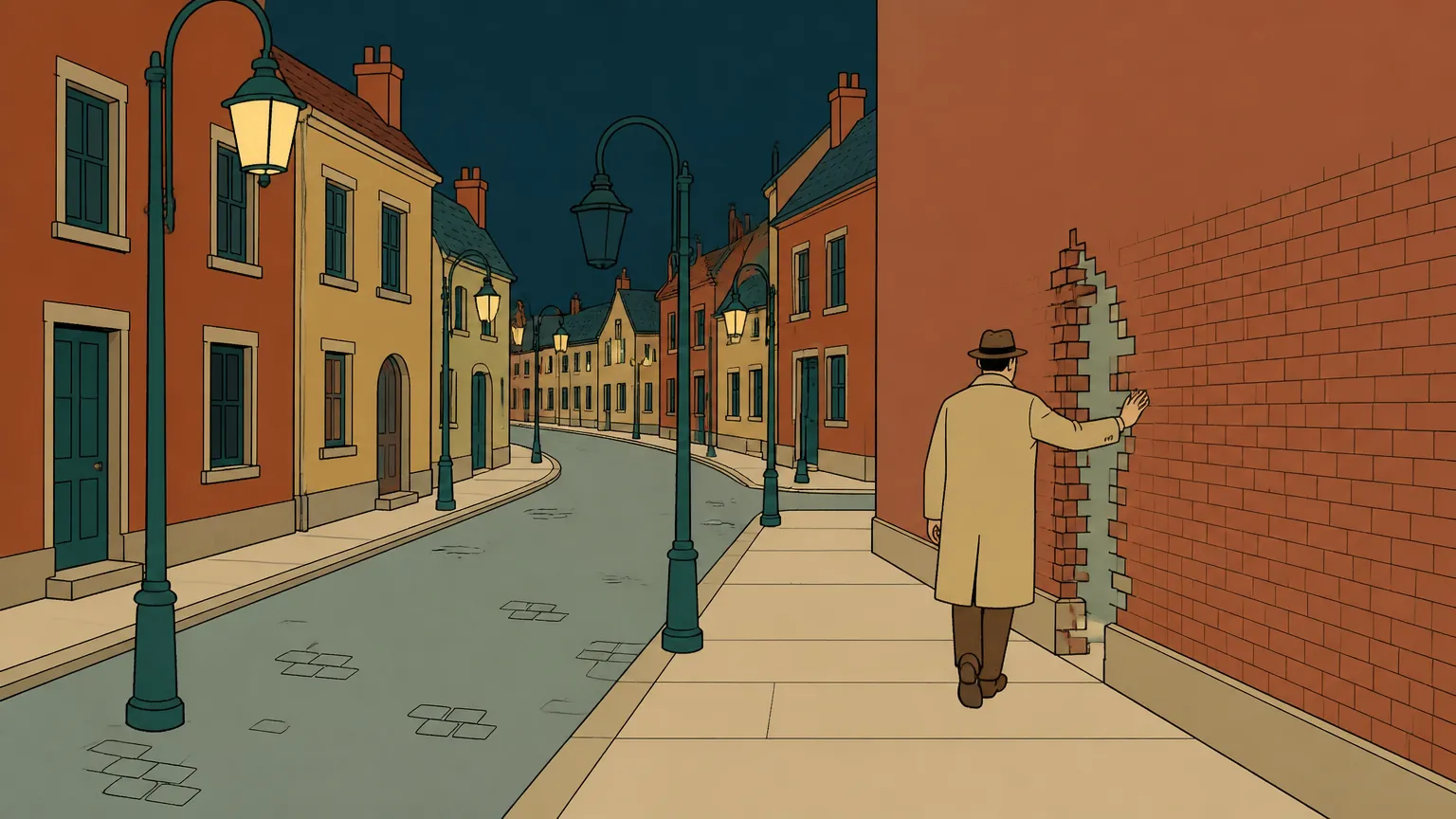
Affecting one is easy — his electrical field zaps computers as he passes, sometimes playfully and unconsciously — but since people get angry about damaged computers they suggest he play instead with street lamps, switching them off as he walks and letting them return, or with car alarms.
They connect this to the fourth defining statement, 'that which you are is that which I am and that which I am is that which you are', and say magnetic fields and moving objects are equally possible, while whatever he thinks is a limitation.
They also note Maggie is good at zapping electronics, though from dislike rather than play.
Asked what the energy work he has been doing amounts to from their perspective, they call it playing with his limits: fun, an interesting puzzle for the mind, giving a sense of self outside physical reality — but he needs to go beyond it.
They suggest observing himself walking through walls, noting the mind's insistence that a wall is solid is the only obstacle.
Such feats give the mind an illusion of power; real power comes from choosing freely, and the question is whether he chooses to zap electronics and walk through walls or to change the world.
Choosing out of fear loses power.
Spirit guides, manifestation and not limiting what the universe brings ▶ Play excerpt08:55

Asked about guides in other dimensions, the Wonders say one can choose that, and some connect to deceased relatives, but usually guides are a filter the mind uses to justify choosing or not choosing — the equivalent of 'God told me' or 'the devil made me do it'.
Most human beings see themselves as so insufficient that they ascribe choice to a higher consciousness rather than own their own power, and blame the guides when things go wrong.
The Wonders say they surround humanity and the universe and would never interfere with free will and free choice: the individual chooses and creates, sending an intention that the universe sets energy in motion to fulfil.
When something does not arrive, it is not that one chose badly but that one added limits and controls — asking for a red BMW forces the universe to search a narrow set of possibilities.
Frederick recounts a debate in which someone insisted one must be extremely precise and detailed; the Wonders call that person very afraid and driven into control, and say the real question is whether one accepts everything the universe brings, giving away what one does not want rather than being stuck with it.
Applying this to his house search, they joke the only useful limits are four walls and a roof, and advise him to simply want a house, choose a town, look at houses and choose one, trusting that what he chooses will satisfy his other needs.
Saying 'that's all I need' minimises the choice.
They contrast this with people who pray for a house but never look for one, waiting for it to fall on their heads.
The most interesting and most puzzling questions Frederick has asked ▶ Play excerpt02:36

Frederick asks which of the questions he has asked across all their conversations was the most interesting; the Wonders reply it was 'How can I choose freely?', with the answer 'Choose.' The most puzzling question, they say, was 'How do I walk on water?', asked in the year 2012 — still in his future — to which the answer was again 'choose', with the how-to left for him to puzzle through.
They decline to say whether he manifested it, as that would interfere with his free will, but confirm he has not managed it in the past, has explored it before and will explore it again.
They describe all of this as 'mind candy' that feeds the mind's appetite for puzzles because simply choosing would be too easy; once he chooses again and again he will experience true joy and discover that fun is only an illusion of joy.
Past lives as a writer, lifetimes in Japan, and incarnations beyond Earth ▶ Play excerpt05:02
Frederick asks when he was a writer.
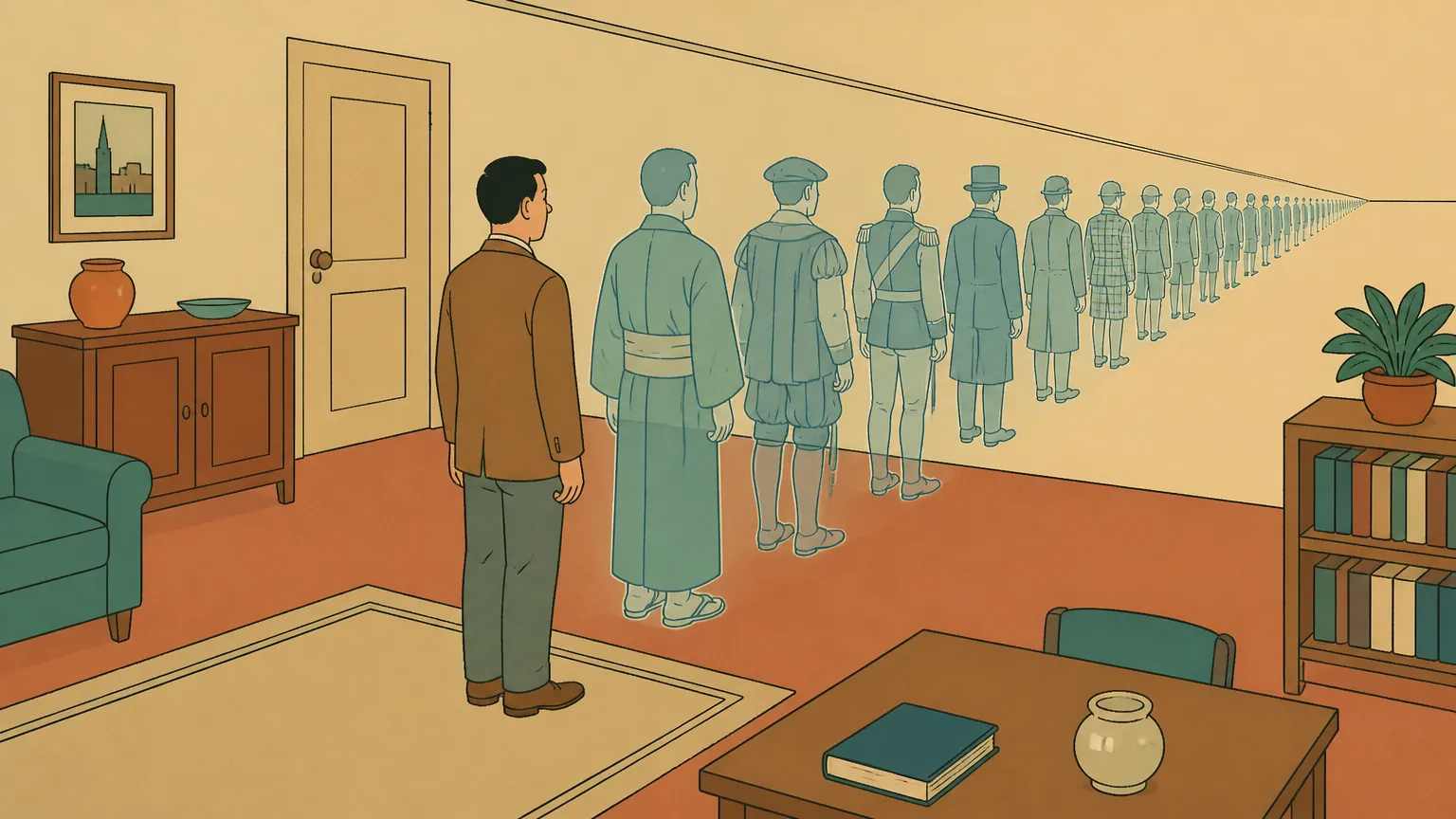
The Wonders name the year 1139 after the birth of the Nazarene, when he was transcribing the Bible, plus other lifetimes writing fiction, stories, plays, and in one Japanese lifetime musical movements.
He has had 344 lifetimes in Japan, which explains his attraction to it, mainly exploring the issue of physical power.
Asked about lifetimes elsewhere, they say the earlier counts referred only to the physical Earth plane; across all of third-dimensional reality he has had approximately 2,444,335,212 lifetimes and counting, in many solar and planetary systems.
These can influence one another if he chooses to allow it; the filters of his Earth environment normally limit this, since he has defined existence as planet Earth while his soul essence knows Earth is only one part.
They suggest his 'weirdest' ideas originate not from earthly experience but from interactions in other planetary systems.
On soul essence, they confirm it extends into other dimensions and that, simultaneously with him, there are five other incarnations of his soul essence on Earth and another 1,192 within third-dimensional reality.
Human lifespan and the mind's limits on aging ▶ Play excerpt02:38
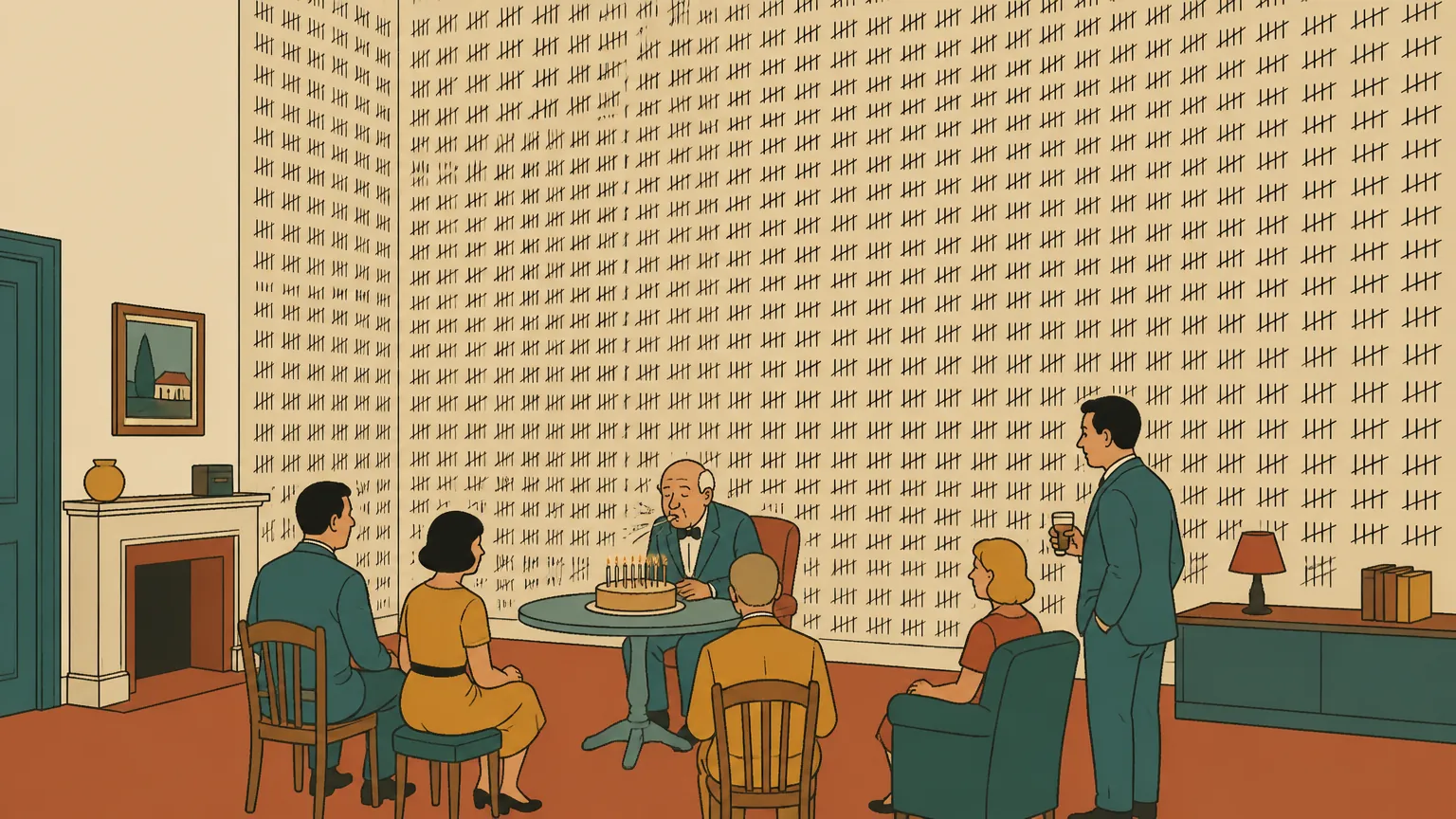
Asked the longest a human has lived, the Wonders say 9,142 years, and repeat that the human body is designed to last 10,444 years before becoming obsolete.
In recent history, within the last 6,000 to 10,000 years, the oldest individuals lived between roughly 800 and 1,242 years, so humanity's pride in reaching 75 is misplaced.
This is due mainly to limitations the mind imposes on the body, in conjunction with the individual's choice to let the mind rule.
They warn that trying to control the mind in order to perform feats leaves in place a psychology that the body is too complex for the mind to fully control, so aging is never mastered; control is an illusion, and what is needed is practice in choosing.
They again recommend their series on aging.
Closing guidance: the best question to ask, and observing without judgment ▶ Play excerpt01:06

With time running short Frederick asks what the best question he could ask right now would be.
The Wonders answer that it is 'What can you give me of the greatest benefit at this time?' — and reply that the benefit is the awareness that what he observes, if observed without judging, is only a drop compared with who he is; the more he observes without judging, the more he discovers the ocean.
They tell him to play with observing without judging, have fun with it, and let no one tell him he cannot or that it must be done a certain way — not even them.